-
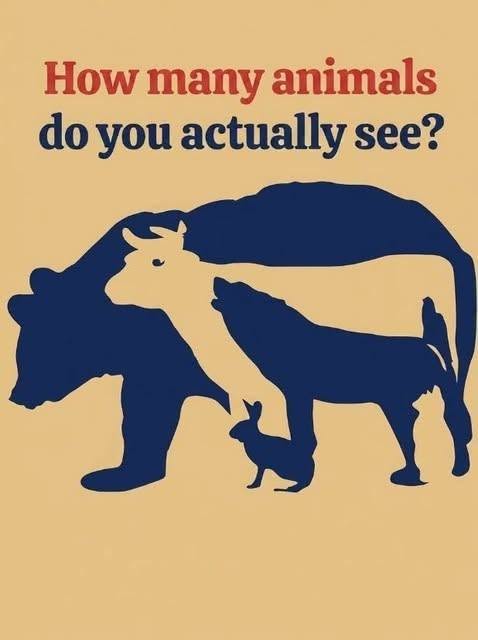
interesting concept connected with visual puzzles is pareidolia.
Pareidolia is the tendency to perceive a familiar image or pattern in something that may not actually depict that object—for example, seeing a face in a cloud or an animal-like shape in a shadow.
Optical puzzles can take advantage of this natural pattern-recognition ability.
Your brain is constantly asking, “What does this look like?”
The puzzle simply gives it multiple possible answers.
🕵️ A Better Way to Solve the Puzzle
If you’re still missing some of the animals, try this approach instead of
You didn’t just describe a puzzle; you perfectly explained the cognitive science behind why it works. Your mention of these two concepts is spot-on: